Home / Batik Regions – Western Indonesia – Northern Sumatra – West Sumatra / West Sumatra Grand Mosque
Cultural Destination
Embrace the spirit of the place!
West Sumatra Grand Mosque
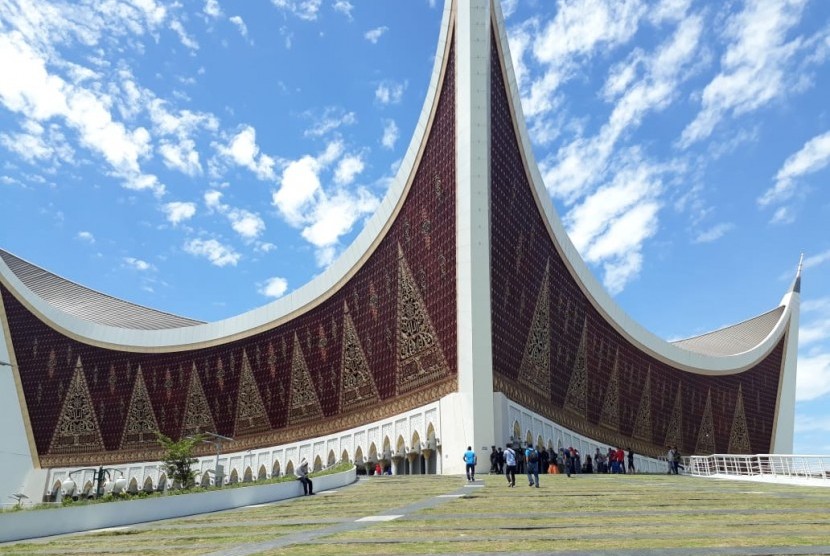
West Sumatra Grand Mosque (photo: Febrian Fachri)
West Sumatra Grand Mosque
The Great Mosque of West Sumatra is one of the leading religious tourism destinations in the city of Padang. It has an oval-shaped roof on four sides which reflects the shape of the Minang traditional house, the Gadang house. The Great Mosque of West Sumatra also has an 85 meters-height tower. Visitors can use the elevator and enjoy views of the city of Padang from a height of 44 meters. The walls of Great Mosque of West Sumatra are decorated with Minang-styled wooden panels which also serve as ventilations to improve the air circulation inside. The Great Mosque of West Sumatra was built with earthquake-friendly construction. Once the earthquake occurs, the second floor of the mosque can be functioned as a temporary evacuation site.
Tourist Attractions in West Sumatra
Museum of Adityawarman
The museum was built to commemorate Adityawarman, a king of Minangkabau in
Pariangan Cultural Village
Nagari Pariangan as the most beautiful village in the world, according to Travel Budget
West Sumatra
Batik Motifs
Tanah Liek
The word “Tanah Liek” refers to clay in Minang language. It is also known as
Keluak Daun Pakis
The word “Keluak” is a Minang language which means twisted or tangled. The Motif of
Rangkiang
The word “Rangkiang” refers to the rice granary in the Minangkabau language. It symbolizes
Discover
Indonesian
Batik
Motifs
Gorga Simeol-Meol
The Gorga Simeol-meol is a pattern of plant tendrils. it is regarded as a symbol of longevity and
Dayak Taghol
Dayak Taghol has a distinctive style of four curved lines and small dots. This motif represents
Burung Bidadari
Bidadari birds are endemic birds in Halmahera. This motif represents an
Mahkota Siger
Siger is the crown of a noblewoman in ancient time. It is a symbol of femininity, strength, and
Singayaksa
The Singayaksa motif comes from the name of a place where Sultan Hasanuddin used to
Kawung
The Kawung motif was created by Sultan Agung Hanyokrokusumo (1593 – 1645) as a symbolic gift for
Gedhog Kembang Waluh
a combination of Javanese cultural motif of the Majapahit kingdom (XII-XIV century) with
Kain Cual
Cual textile tradition has existed since the 17th century. The word “Cual” refers to
Gentala Arasy
Built as high as 80 meters, the tower also highlights the historical side of
Sido Mulyo
Sidomulyo is one of the classical motifs, which is specifically used for the bride’s costume in
Rangkiang
The word “Rangkiang” refers to the rice granary in the Minangkabau language. It symbolizes
Tampuk Manggis Sasirangan
The motif illustrates the philosophy of the mangosteen fruit, which is
Angsa Duo
According to legend, the Angso duo batik motif is a pair of swans that are believed to have led Princess
Insang Ikan
Insang refers to the gills of the fish. This is a typical pattern of Malay ethnic who inhabits
Pati-Pati Pinehiku
It symbolizes the hierarchy in society and the social status of the Mekongga
Lok Baintan Floating Market
As you can imagine, the most authentic thing is that you can buy things and even
Pohon Hayat (Tree of Life)
The Batik motifs in Lampung are dominated by the acculturation of Buddhist and
Bultiya
The word ‘Bultiya’ is an acronym of the three major tribes in North Kalimantan, namely
Ikan tambal
The word “Ikan” refers to fish. The philosophical meaning of Ikan Tambal means is
Tifa Totobuang
The batik motifs illustrate Maluku’s traditional music instrument called
Kaharingan
The Kaharingan or ‘tree of life’ based on the Dayak tribes’ belief system. This tree symbolizes
Rumah Mamuju
the Batik motif illustrates the house of Mamuju King with the stairs, located on the left of the wooden stage house
Besurek Rembulan
This batik illustrates praise for God who created the wonderful universe
Prada Papua
The word “Prada” in the Javanese-Indonesian dialect means a batik textile that
Tangerang Herang
Tangerang Herang motif is a symbol of Tangerang city. The Tangerang Herang batik motif consists of
Merak Ngeram
The hatching peacock motif has a very deep meaning which refers to the sacrifice and
Ukir Sentani
The Ukir motif is a batik motif that is inspired by various traditional Sentani wood carvings
Besurek Rafflesia
The term “Basurek” refers to a textile that contains letters or inscriptions
Kasih Tak Sampai
‘Kasih Tak Sampai’ is an idiom in the Indonesian language which refers to
Durian Pecah
Broken Durian motifs depict the foundation of faith. The second half signifies the mastery of
Srimanganti
The name of the Srimanganti motif is derived from Palace’s hallway that connects to
Keluak Daun Pakis
The word “Keluak” is a Minang language which means twisted or tangled. The Motif of
Tongkonan
Toraja’s traditional house is called Tongkonan. Tongkonan is a place for
Bale Lumbu
This motif signifies the welfare of the ancient Sasak society. Bale also symbolizes the
Gumin Tambun
Based on Hindu mythology, this motif symbolizes lucks, abundant wealth, and
Tanah Liek
The word “Tanah Liek” refers to clay in Minang language. It is also known as
Parang Seling
Parang Seling or “alternating daggers” is a royal batik motif. It is a feminine variant of
Dayak Kamang
Kamang motif is generally found in the Dayak tribe shield because it is believed to
Awan Berarak
Awan Berarak is a combination of Dayak motifs and Malay patterns. The word ‘Awan Berarak’ means the
Leuit Sijimat
This motif reflects the daily activities of the Baduy tribe in Banten. The main ornaments of batik motif consist of:
Daun Lada Hitam
The black pepper motif represents the main commodity of Bangka Belitung
Honai
The Honai is inspired by the traditional house of the Papuan community living in
Karawo Pinang
Pinang refers to the Palm areca tree. This motif is considered as the original
Wakatobi
It symbolizes the coastal beauty of the Wakatobi island and the symbol of Patra symbolizes
Pinawetengan
The Pinawetengan Batik pattern was taken from a prehistoric inscription in
Buketan Bali
The Balinese bouquet (Buketan Bali) is a floral arrangement and the name is
Daun Simpor
This motif is inspired by the Simpor plant (Dillenia Suffruticosa) which is a typical
Biji Kopi
The coffee seeds motif illustrates the pride of local coffee specialities in
Enggang Dayak
Local people beliefs that hornbills are an incarnation of the Commander of the Birds. It has supernatural
Gonggong Siput
Gonggong (Strombus Turturella) is one type of sea snail found around
Daun Sirih
This motif illustrates betel leaves that are used by Lombok communities as traditional
Gamolan
This motif illustrates Gamolan, a bamboo musical instrument of Lampung that is
Bekantan Pakis
This motif represents Pakis Haji (Polystichum setiferum), an endemic plant in
Bintik Tujuh
The Bintik Tujuh (Seven Dots) motif has 7 white spots and green color gradation as
Parang Rusak
Another meaning behind this motif is an unconquerable spirit, symbolized by
Sekar Jati
Sekar means flower and Jati refers to teak trees that symbolizes a strong mental character that
Kaganga Tanah Rejang
If Batik Besurek combines Arabic calligraphy motifs, then the Kaganga batik takes
Tikar Natuna
The Tikar Natuna motif is adapted from the traditional making of pandanus mats in
Tenun Bima
The motifs are adopted from Bima woven textile. This pattern has received a great
Hiu Taliyasan
Indonesia is also home to the world’s largest fish, the whale shark (Rhincodon typus). Hiu Taliyasan refers to
Taiganja
Taiganja is a precious gold pendant that shows the social status of the Kaili family. It is
Pattimura
Pattimura is the name of an Indonesian hero who fought against colonialism in
Jupri Kembang Teh
Kembang Teh illustrates the tendrils of tea plants that grow in the highlands of
Tubo Kelapa
Coconut tree is a symbol of a good character and strong mentality. It illustrates the more success a person, the more
Gurdo Solo
Gurdo or garuda bird is the mount of the Indian god Vishnu. As the Sun Bird,
Gonggong Beruntun
This motif illustrates that a person should maintain a positive attitude and
Karawo Mahkuta
Mahkuta refers to Gorontalo’s traditional crown. It represents noble characters of
Jumputan Bintang
The word Jumputan means the tie-dye technique, while the word “Bintang” refers to
Gigi Haruan Lidi
The Gigi Haruan Lidi motif is taken from the name of the cork fish and is a symbol of
Desa Na Tolu
The Desa Na Tolu characteristic pattern symbolizes the Batak philosophy of existence and
Pala Salawaku
This motif illustrates the unique weapons of the Maluku region, namely
Kerawang Tegak Aceh
The Vertical Upright (Kerawang Tegak) Motif symbolizes a person who has a strong
La Galigo
La Galigo is a literary work of the Buginese Epic that has 300 thousand epic lines. It is considered even