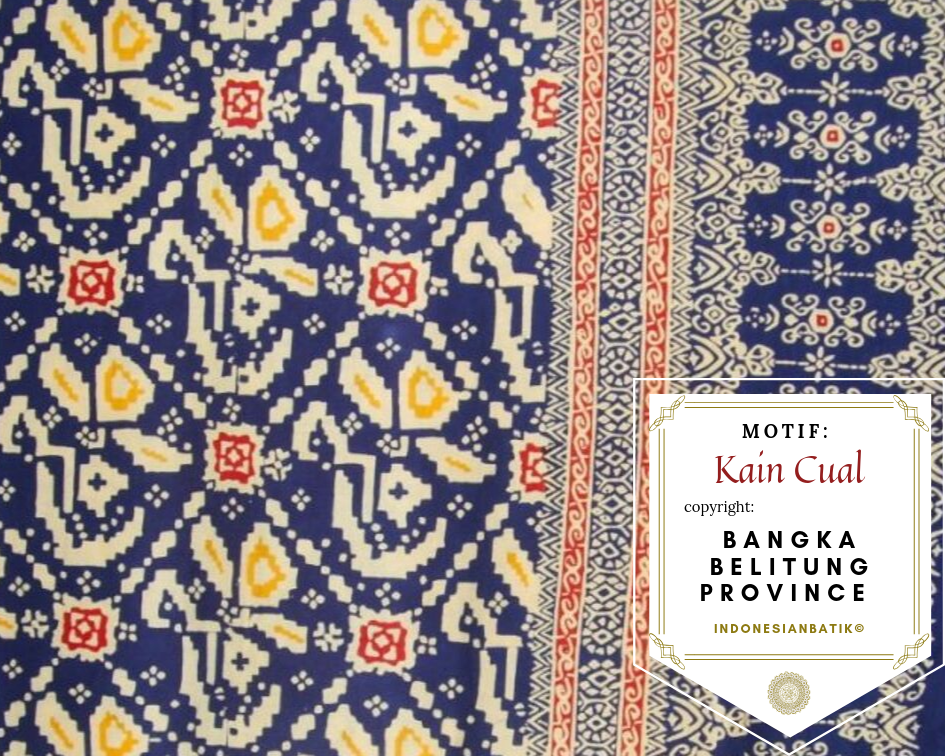
Kain Cual
Bangka Belitung province - Indonesia
Meanings:
Cual textile tradition has existed since the 17th century. The word “Cual” refers to woven textile, which was first invented by the Muntok community in West Bangka. Cual Batik motifs are adopted from plants and animals. Nowadays, the craftsman combines the Batik handwriting with the production of Cual textile. The Cual Fabric motif with the flower ornaments symbolizes purity, elegance, and good wishes for the user.
Note: All contents and batik images are protected by Indonesian cultural property law. This documentation is intended for educational purposes and to facilitate the preservation of Batik UNESCO's intangible cultural heritage 2009. Any use of published materials is allowed only with reference to this website as the original source of publication.
How to preserve Batik
Philosophical Meanings of Batik
Learn and identify the meaning of the motifs from each region. Are you searching for a meaningful gift for your loved ones? Surprise them with a merry little Batik!
Authentic Batik
Buy the authentic handwritten Batik textiles to add to your prestigious collection. Such support will enhance the well-being of Batik artisans and preserve the living heritage.
Batik Community
If you want to meet the Batik artisans, we encourage you to visit and support Batik workshops in Indonesia. You may discover the local tourism that suits your preference!
UNESCO Intangible Cultural Heritage of Humanity in 2009
Batik Production Process in Bangka Belitung
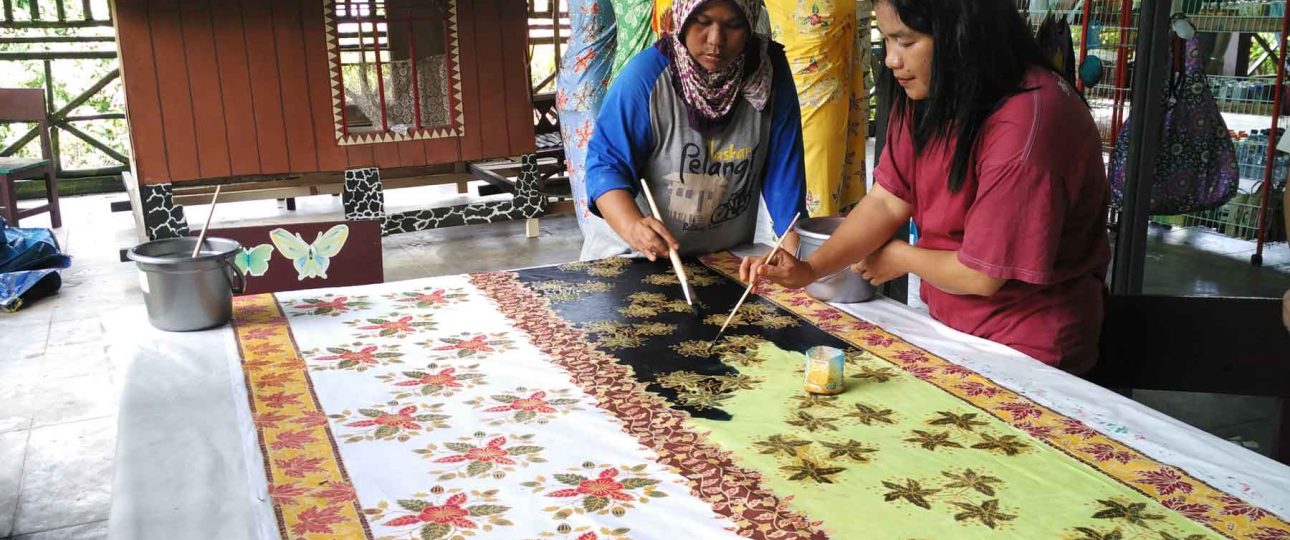
Batik production can take 1 month up to 2 years of working time depending on the purposes of the textile creation and the colour complexity. The Batik handwriting textile is generally made with 8 design steps, ranging from wax patterning to colouring process. The artists use Canting, as a tool to put hot melted wax on the cloth.
Batik Regions

Overview of Bangka Belitung Province
Bangka Belitung is known as a tin-producing area. It has beautiful beaches and a multiethnic culture. The capital of the province is Pangkal Pinang. Bangka Belitung Islands Province (abbreviated as Babel) is located close to Sumatra Island.
Batik Villages in Bangka Belitung Province
Batik villages are the region where the Batik producers mostly reside and open their Batik workshops, as well as display their Batik products. You could buy the Batik textiles from the artisans and participate in the making process of Batik on the site.
Batik Motifs in Bangka Belitung
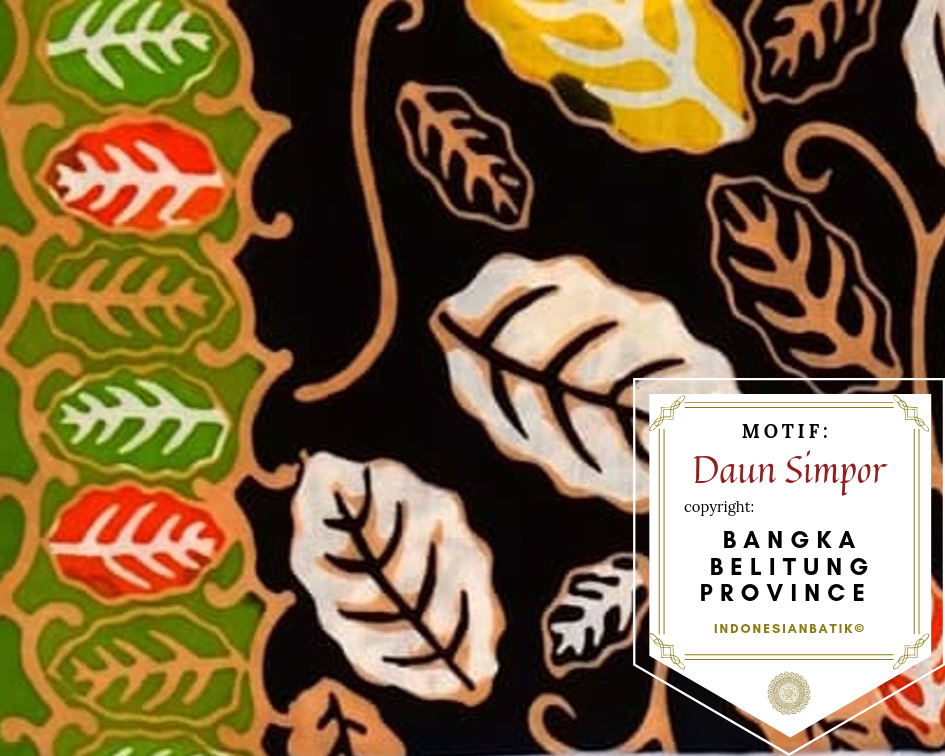
Daun Simpor
This motif is inspired by the Simpor plant (Dillenia Suffruticosa) which is a typical
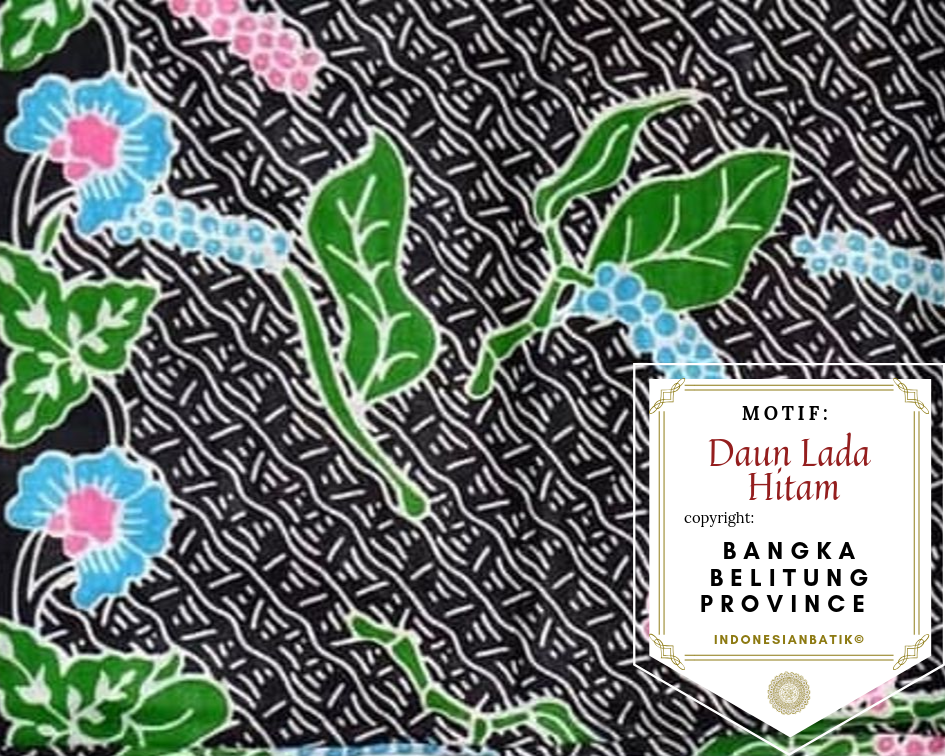
Daun Lada Hitam
The black pepper motif represents the main commodity of Bangka Belitung
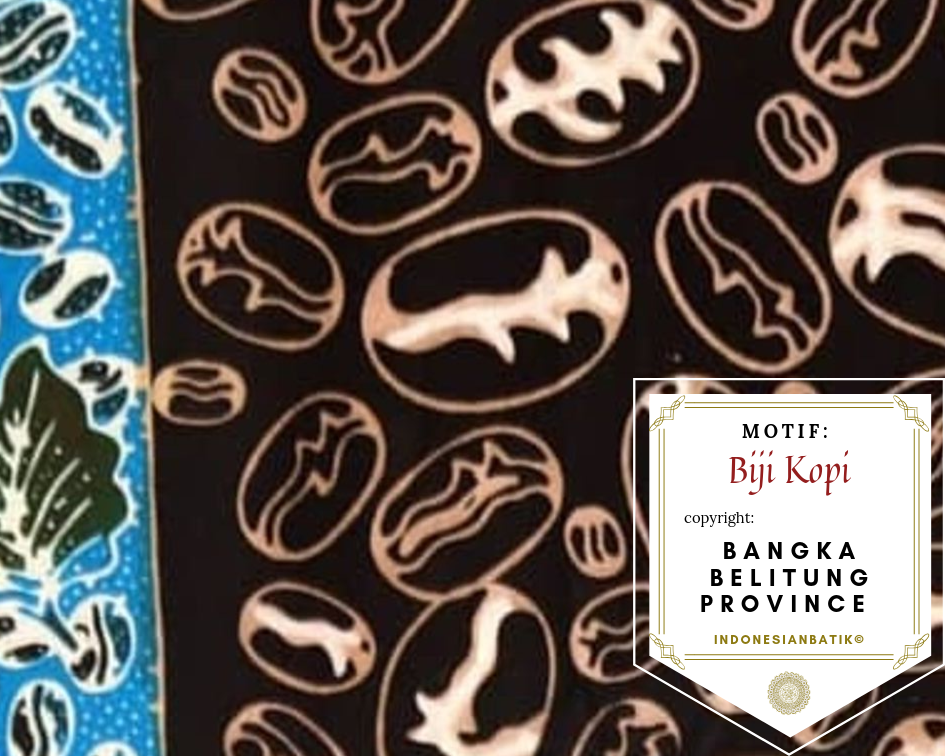
Biji Kopi
The coffee seeds motif illustrates the pride of local coffee specialities in