Home / Batik Regions - Western Indonesia - Southern Sumatra - Jambi / Durian Pecah
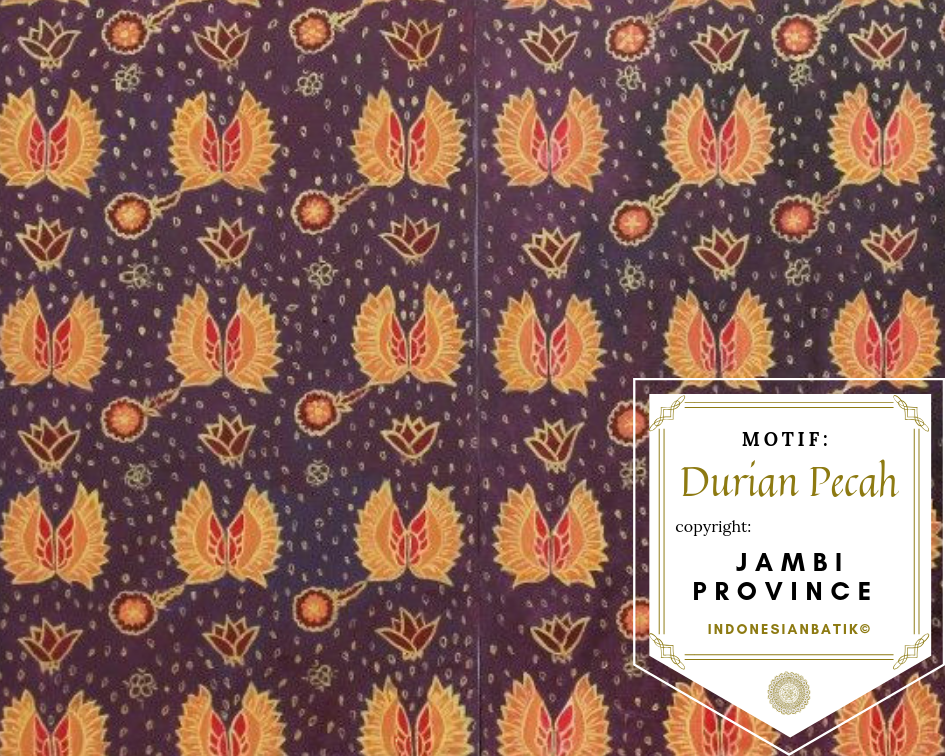
Durian Pecah
Jambi Province - Indonesia
Meanings:
Broken Durian motifs depict two parts of Durian fruit, which are still interlocked at the base of the stem. The first half of the fruit means the foundation of faith and piety. The second half signifies the mastery of science and technology. The overall meaning of this motif is that all works must be based on faith, moral wisdom, and supported by science and technology to get maximum and satisfying results.
Note: All contents and batik images are protected by Indonesian cultural property law. This documentation is intended for educational purposes and to facilitate the preservation of Batik UNESCO's intangible cultural heritage 2009. Any use of published materials is allowed only with reference to this website as the original source of publication.
How to preserve Batik
Philosophical Meanings of Batik
Learn and identify the meaning of the motifs from each region. Are you searching for a meaningful gift for your loved ones? Surprise them with a merry little Batik!
Authentic Batik
Buy the authentic handwritten Batik textiles to add to your prestigious collection. Such support will enhance the well-being of Batik artisans and preserve the living heritage.
Batik Community
If you want to meet the Batik artisans, we encourage you to visit and support Batik workshops in Indonesia. You may discover the local tourism that suits your preference!
UNESCO Intangible Cultural Heritage of Humanity in 2009
Batik Production Process in Jambi
Batik production can take 1 month up to 2 years of working time depending on the purposes of the textile creation and the colour complexity. The Batik handwriting textile is generally made with 8 design steps, ranging from wax patterning to colouring process. The artists use Canting, as a tool to put hot melted wax on the cloth.
Batik Regions
Overview of Jambi Province
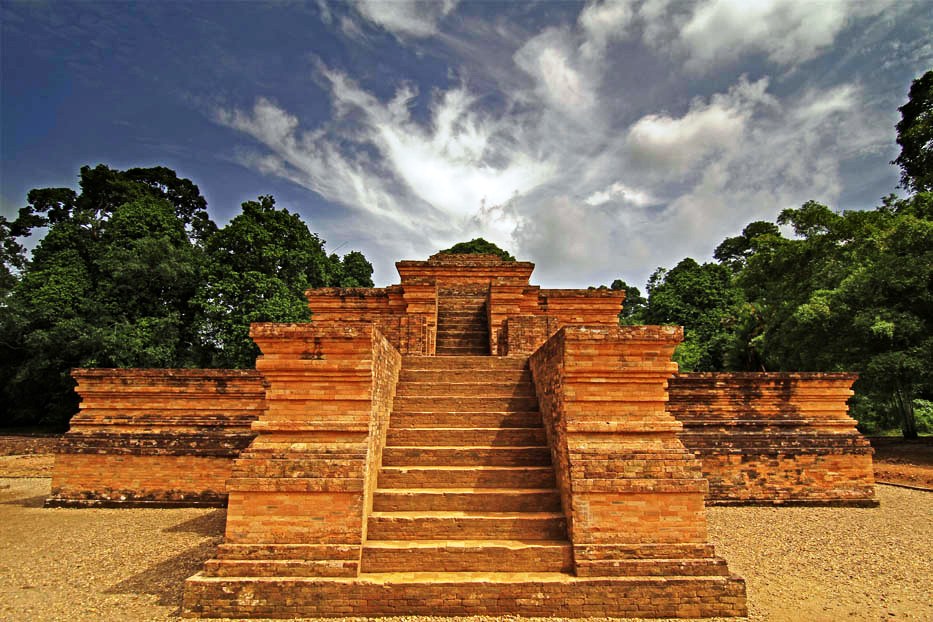
Jambi is not only known for its natural tourism but also it has a rich cultural diversity shown by its cultural heritage sites. Visitors can visit Karang Berahi Site, the Muaro Jambi Temple, the tombs of the kings, and the shape of Buddhist stupas in normal season or during annual local festivals.
Batik Villages in Jambi Province
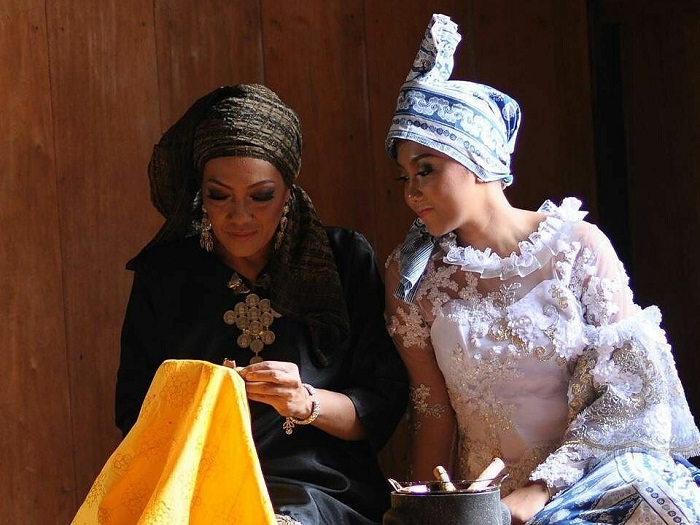
Batik villages are the region where the Batik producers mostly reside and open their Batik workshops, as well as display their Batik products. You could buy the Batik textiles from the artisans and participate in the making process of Batik on the site.
Batik Motifs in Jambi
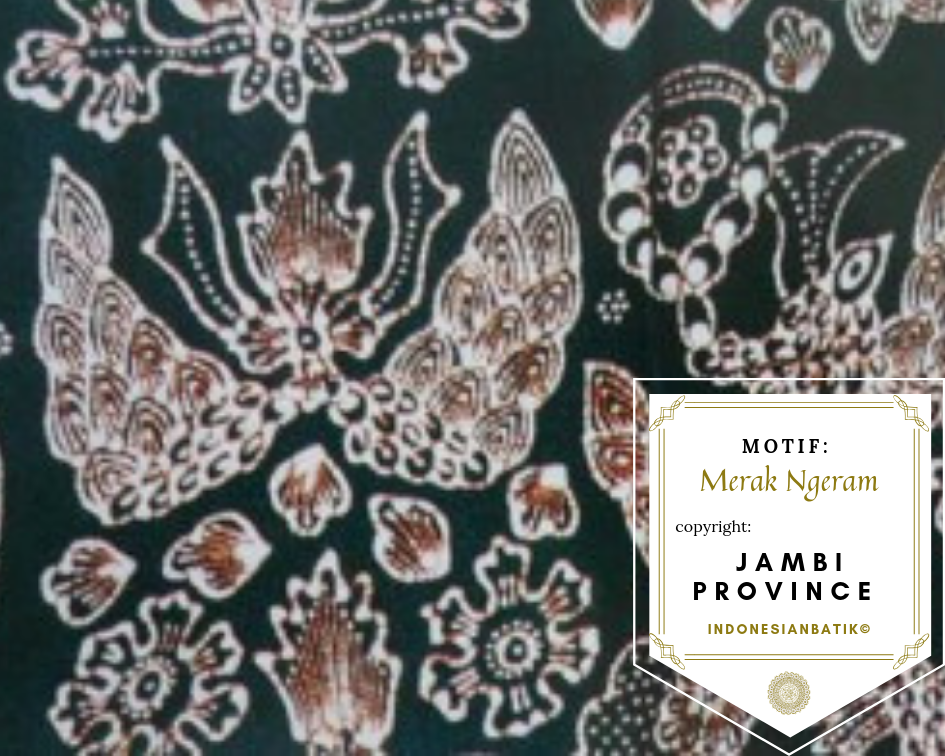
Merak Ngeram
The hatching peacock motif has a very deep meaning which refers to the sacrifice and
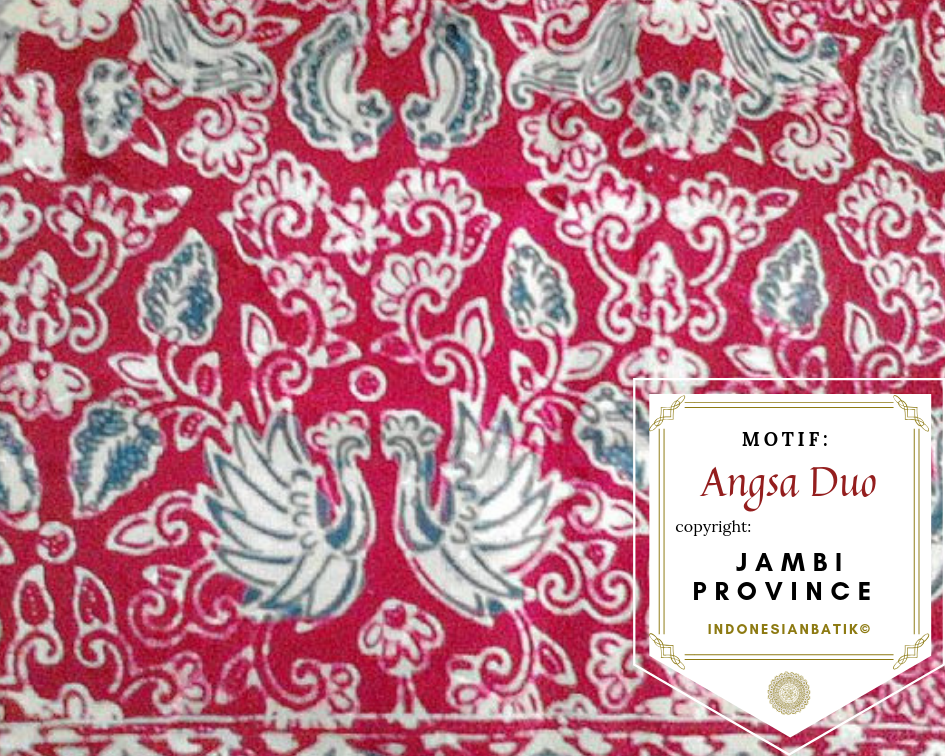
Angsa Duo
According to legend, the Angso duo batik motif is a pair of swans that are believed to have led Princess