Home / Batik Regions - Central Indonesia - Kalimantan Island - East Kalimantan / Bangkirai Hill Natural Conservation Site

Natural Destination

Experience the tropical nature!

Bangkirai Hill Natural Conservation Site
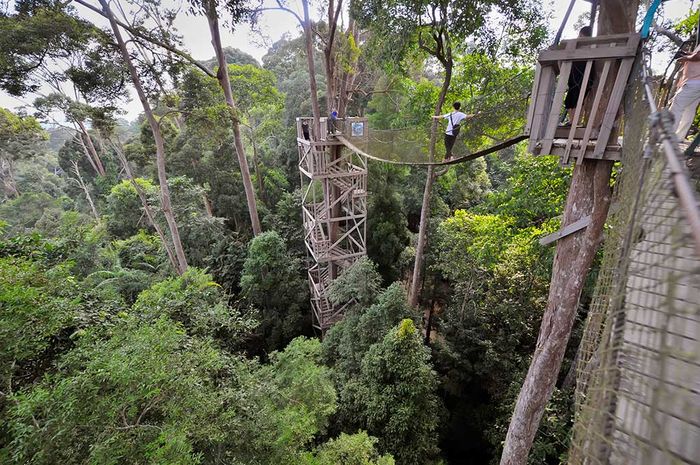
The Canopy Bridge at Bangkirai Hill (photo: Intisari)

Bangkirai Hill

If you have always dreamt to spend a night in a forest and do some adrenaline-pumping outdoor activities, you can do it in here. They also have a small restaurant to enjoy your meal in this tropical scenario. You will also discover the natural landscape as well as diverse flora and fauna unique to East Kalimantan.

Natural Tourism Destination

Bangkirai Hill Natural Conservation Site

Tourist Attractions in East Kalimantan
East Kalimantan

Batik Motifs

Kuntul Perak

Kuntul Perak refers to Egret Silver Bird. This bird is a Kalimantan endemic animal that becomes the

Tengkawang Ampiek

With its many advantages, the Dayaks use this leaf in ritual ceremonies. This plant is a symbol of

Rutun Penyu

This motif describes the local wisdom which favours modesty and

Hiu Taliyasan

Indonesia is also home to the world’s largest fish, the whale shark (Rhincodon typus). Hiu Taliyasan refers to


Discover

Indonesian

Batik

Motifs

Teguh Bersatu

This batik motif shows the strength of the people of Kupang. It also represents a sense of

Pati-Pati Pinehiku

It symbolizes the hierarchy in society and the social status of the Mekongga

Sekomandi

Its philosophical meaning is the eternal union which refers to a saying “until death do us part”

Awan Berarak

Awan Berarak is a combination of Dayak motifs and Malay patterns. The word ‘Awan Berarak’ means the

Tangerang Herang

Tangerang Herang motif is a symbol of Tangerang city. The Tangerang Herang batik motif consists of

Tabir Tanjung

Tanjung flower is a type of Cherry tree flower, which is commonly found in

Gumin Tambun

Based on Hindu mythology, this motif symbolizes lucks, abundant wealth, and

Waruga

Minahasa batik motifs are adopted from Waruga. Waruga is the

Rutun Penyu

This motif describes the local wisdom which favours modesty and

Tengkawang Ampiek

With its many advantages, the Dayaks use this leaf in ritual ceremonies. This plant is a symbol of