
Home / Batik Regions - Central Indonesia - Kalimantan Island - West Kalimantan / Kadriah Royal Palace
Cultural Destination
Embrace the spirit of the place!
Kadriah Royal Palace
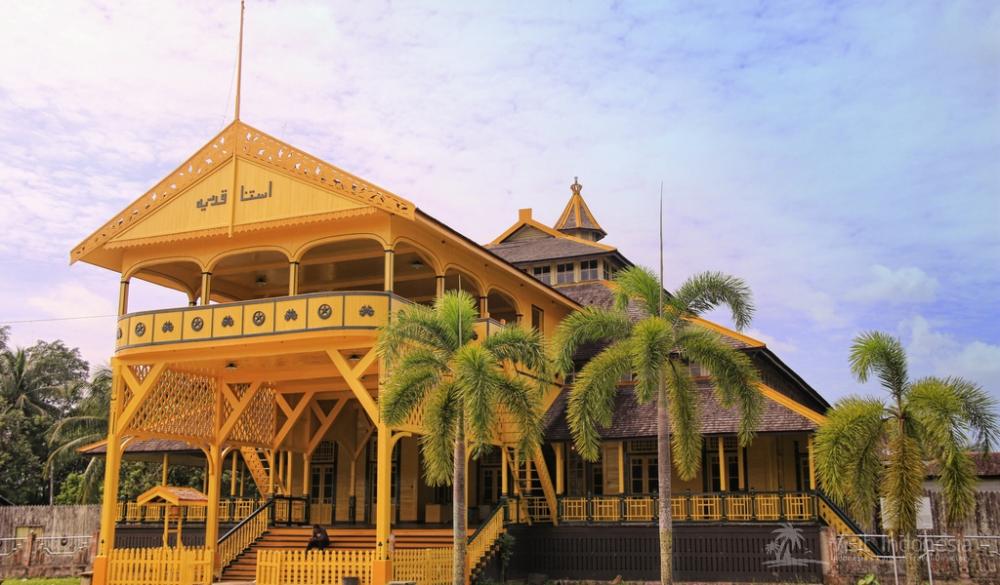
Kadriah Royal Palace in Pontianak city (photo: Kratonpedia)
Kadriah Royal Palace
This is the place if you want to see cultural assimilation in architecture. Located in East Pontianak, the Kadriah Palace was constructed with the finest ironwood that endures for centuries. Its architecture style is the mixture of Malay, the Middle East, and Western art, which is obvious in both the exterior and interior. The palace was constructed by Sultan Syarif Abdurrahman Alkadri, who was also the founder of Pontianak City in 1771 AD. Enjoy the exotic glory of times past here!
Cultural Tourism Destination
Kadriah Royal Palace in Pontianak City
Tourist Attractions in West Kalimantan
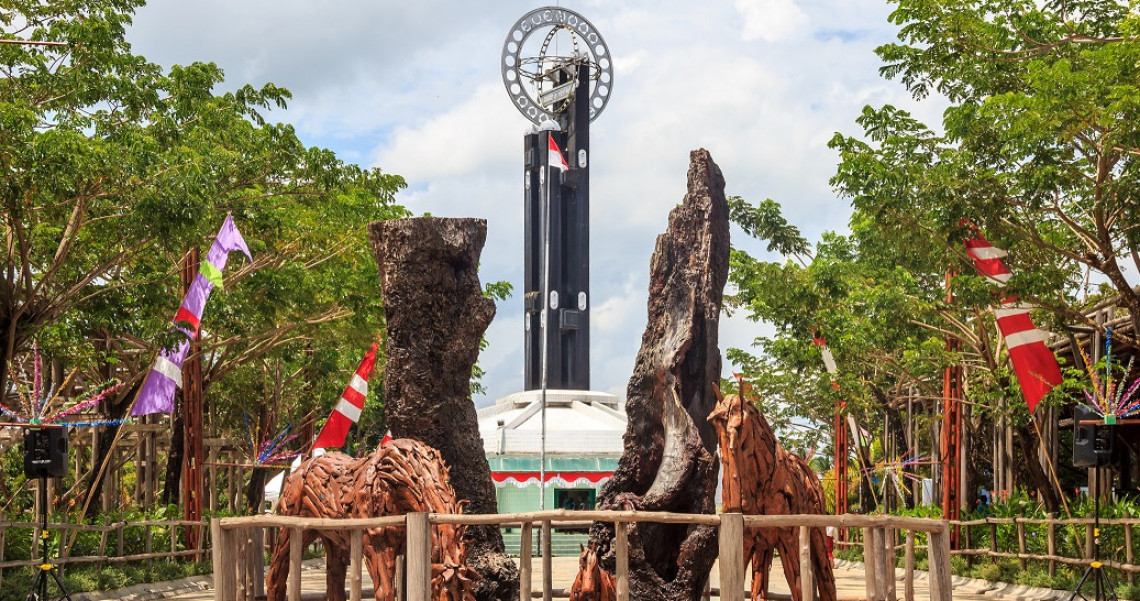
Equator Monument
As the main tower in Pontianak, the equatorial monument is crossed by a line that divides the
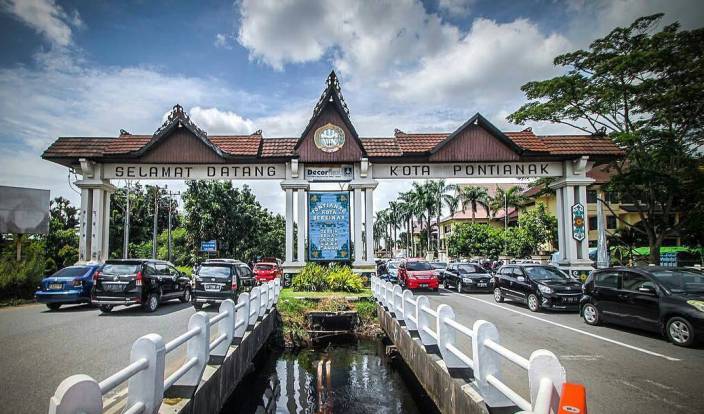
Pontianak City
The capital city of West Kalimantan that also known as the “Equator Zero”. Apart from this unique
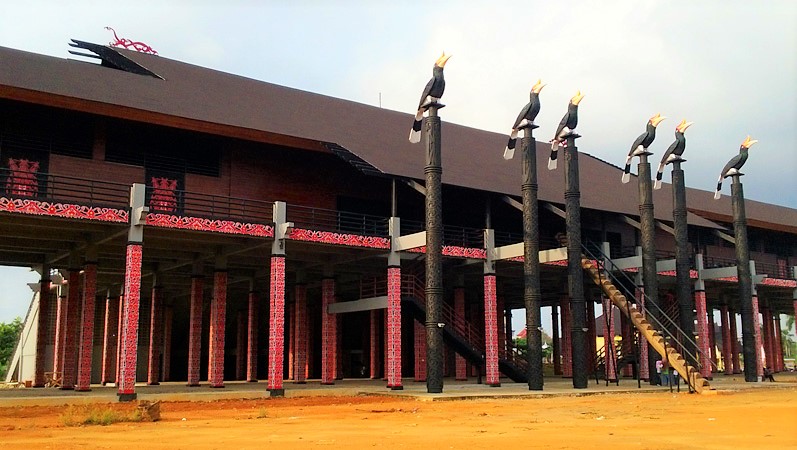
Betang Traditional House
The Betang house is the traditional Dayak Great House, and it contains a lot of its spiritual and
West Kalimantan
Batik Motifs